


Gas-powered turbine engines have come a long way since 1903. That was the first year a gas turbine produced enough power to keep itself running.
The design was accomplished by Norwegian inventor Aegidius Elling, and it produced 11 horsepower, which was a massive feat at the time.
Gas turbine engines are mostly used in aircraft. There are four kinds of gas turbine engines. They are divided by the way they generate power.
- 𝐓𝐮𝐫𝐛𝐨 𝐣𝐞𝐭 𝐞𝐧𝐠𝐢𝐧𝐞
- 𝐓𝐮𝐫𝐛𝐨𝐩𝐫𝐨𝐩 𝐞𝐧𝐠𝐢𝐧𝐞
- 𝐓𝐮𝐫𝐛𝐨𝐟𝐚𝐧 𝐞𝐧𝐠𝐢𝐧𝐞
- 𝐓𝐮𝐫𝐛𝐨 𝐬𝐡𝐚𝐟𝐭 𝐞𝐧𝐠𝐢𝐧𝐞
A typical gas turbine engine consists of:
- 𝘼𝙣 𝙖𝙞𝙧 𝙞𝙣𝙡𝙚𝙩
- 𝘾𝙤𝙢𝙥𝙧𝙚𝙨𝙨𝙤𝙧 𝙨𝙚𝙘𝙩𝙞𝙤𝙣
- 𝘾𝙤𝙢𝙗𝙪𝙨𝙩𝙞𝙤𝙣 𝙨𝙚𝙘𝙩𝙞𝙤𝙣
- 𝙏𝙪𝙧𝙗𝙞𝙣𝙚 𝙨𝙚𝙘𝙩𝙞𝙤𝙣
- 𝙀𝙭𝙝𝙖𝙪𝙨𝙩 𝙨𝙚𝙘𝙩𝙞𝙤𝙣
- 𝘼𝙘𝙘𝙚𝙨𝙨𝙤𝙧𝙮 𝙨𝙚𝙘𝙩𝙞𝙤𝙣, 𝙚𝙩𝙘.
𝐈- 𝐓𝐔𝐑𝐁𝐎𝐉𝐄𝐓 𝐄𝐍𝐆𝐈𝐍𝐄

This engine makes power by thrusting the compressed air into the atmosphere.
These kinds of engines are usually used in supersonic jets. Because it needs thrusting power to push the vehicle.
Turbojet engines were the first type of gas turbine engine invented.
And even though they look completely different from the reciprocating engine in your car or plane, they operate using the same theory:
- 𝙞𝙣𝙩𝙖𝙠𝙚
- 𝙘𝙤𝙢𝙥𝙧𝙚𝙨𝙨𝙞𝙤𝙣
- 𝙥𝙤𝙬𝙚𝙧
- 𝙚𝙭𝙝𝙖𝙪𝙨𝙩
The turbojet engine consists of four sections—compressor, combustion chamber, turbine section, and exhaust.
The compressor section passes inlet air at a high rate of speed to the combustion chamber.
The combustion chamber contains the fuel inlet and igniter for combustion. The expanding air drives a turbine, which is connected by a shaft to the compressor, sustaining engine operation.
The accelerated exhaust gases from the engine provide thrust.
This is a basic application of compressing air, igniting the fuel-air mixture, producing power to self-sustain the engine operation, and exhaust for propulsion.
– Advantages of turbojet engine:
- 𝗥𝗲𝗹𝗮𝘁𝗶𝘃𝗲𝗹𝘆 𝘀𝗶𝗺𝗽𝗹𝗲 𝗱𝗲𝘀𝗶𝗴𝗻
- 𝗖𝗮𝗽𝗮𝗯𝗹𝗲 𝗼𝗳 𝘃𝗲𝗿𝘆 𝗵𝗶𝗴𝗵 𝘀𝗽𝗲𝗲𝗱𝘀
- 𝗧𝗮𝗸𝗲𝘀 𝘂𝗽 𝗹𝗶𝘁𝘁𝗹𝗲 𝘀𝗽𝗮𝗰𝗲
– Disadvantages of turbojet engine:
- 𝗛𝗶𝗴𝗵 𝗳𝘂𝗲𝗹 𝗰𝗼𝗻𝘀𝘂𝗺𝗽𝘁𝗶𝗼𝗻
- 𝗟𝗼𝘂𝗱
- 𝗣𝗼𝗼𝗿 𝗽𝗲𝗿𝗳𝗼𝗿𝗺𝗮𝗻𝗰𝗲 𝗮𝘁 𝘀𝗹𝗼𝘄 𝘀𝗽𝗲𝗲𝗱𝘀
- 𝗟𝗶𝗺𝗶𝘁𝗲𝗱 𝗶𝗻 𝗿𝗮𝗻𝗴𝗲 𝗮𝗻𝗱 𝗲𝗻𝗱𝘂𝗿𝗮𝗻𝗰𝗲
𝐈𝐈 – 𝐓𝐔𝐑𝐁𝐎𝐏𝐑𝐎𝐏 𝐄𝐍𝐆𝐈𝐍𝐄
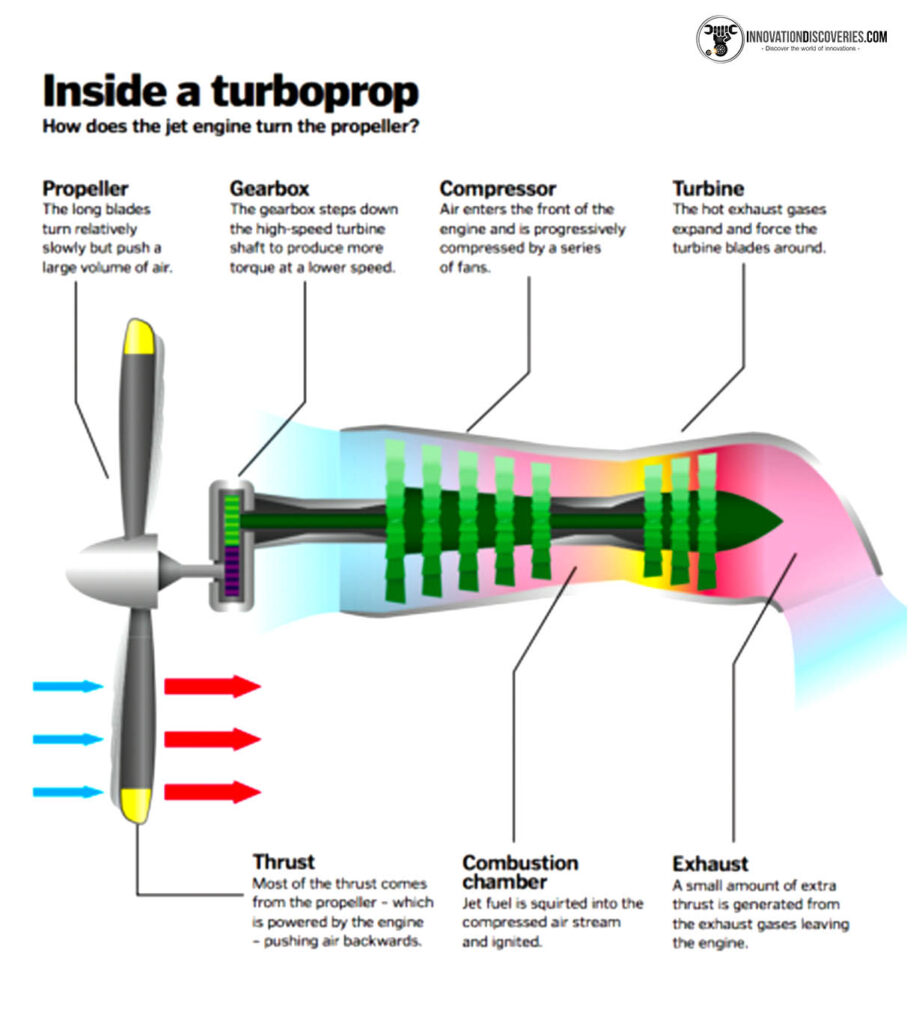
In this engine, the shaft itself rotates the propeller, which thrusts the air to the backside.
Nowadays, these types of engines are not very popular. These engines are used in small personal types of aircraft.
The turboprop is a turbojet engine connected to a propeller through a gearing system.
The typical turboprop engine can be broken down into assemblies as follows:
- 𝗧𝗵𝗲 𝗽𝗼𝘄𝗲𝗿 𝘀𝗲𝗰𝘁𝗶𝗼𝗻 𝗮𝘀𝘀𝗲𝗺𝗯𝗹𝘆—𝗰𝗼𝗻𝘁𝗮𝗶𝗻𝘀 𝘁𝗵𝗲 𝘂𝘀𝘂𝗮𝗹 𝗺𝗮𝗷𝗼𝗿 𝗰𝗼𝗺𝗽𝗼𝗻𝗲𝗻𝘁𝘀 𝗼𝗳 𝗮 𝗴𝗮𝘀 𝘁𝘂𝗿𝗯𝗶𝗻𝗲 𝗲𝗻𝗴𝗶𝗻𝗲
- (𝗶.𝗲., 𝗰𝗼𝗺𝗽𝗿𝗲𝘀𝘀𝗼𝗿, 𝗰𝗼𝗺𝗯𝘂𝘀𝘁𝗶𝗼𝗻 𝗰𝗵𝗮𝗺𝗯𝗲𝗿, 𝘁𝘂𝗿𝗯𝗶𝗻𝗲, 𝗮𝗻𝗱 𝗲𝘅𝗵𝗮𝘂𝘀𝘁 𝘀𝗲𝗰𝘁𝗶𝗼𝗻𝘀).
- 𝗧𝗵𝗲 𝗿𝗲𝗱𝘂𝗰𝘁𝗶𝗼𝗻 𝗴𝗲𝗮𝗿 𝗼𝗿 𝗴𝗲𝗮𝗿𝗯𝗼𝘅 𝗮𝘀𝘀𝗲𝗺𝗯𝗹𝘆—𝗰𝗼𝗻𝘁𝗮𝗶𝗻𝘀 𝘁𝗵𝗼𝘀𝗲 𝘀𝗲𝗰𝘁𝗶𝗼𝗻𝘀 𝘂𝗻𝗶𝗾𝘂𝗲 𝘁𝗼 𝘁𝘂𝗿𝗯𝗼𝗽𝗿𝗼𝗽 𝗰𝗼𝗻𝗳𝗶𝗴𝘂𝗿𝗮𝘁𝗶𝗼𝗻𝘀.
- 𝗧𝗵𝗲 𝘁𝗼𝗿𝗾𝘂𝗲𝗺𝗲𝘁𝗲𝗿 𝗮𝘀𝘀𝗲𝗺𝗯𝗹𝘆—𝘁𝗿𝗮𝗻𝘀𝗺𝗶𝘁𝘀 𝘁𝗵𝗲 𝘁𝗼𝗿𝗾𝘂𝗲 𝗳𝗿𝗼𝗺 𝘁𝗵𝗲 𝗲𝗻𝗴𝗶𝗻𝗲 𝘁𝗼 𝘁𝗵𝗲 𝗴𝗲𝗮𝗿𝗯𝗼𝘅 𝗼𝗳 𝘁𝗵𝗲 𝗿𝗲𝗱𝘂𝗰𝘁𝗶𝗼𝗻 𝘀𝗲𝗰𝘁𝗶𝗼𝗻.
- A𝗰𝗰𝗲𝘀𝘀𝗼𝗿𝘆 𝗱𝗿𝗶𝘃𝗲 𝗵𝗼𝘂𝘀𝗶𝗻𝗴 𝗮𝘀𝘀𝗲𝗺𝗯𝗹𝘆—𝗺𝗼𝘂𝗻𝘁𝗲𝗱 𝗼𝗻 𝘁𝗵𝗲 𝗯𝗼𝘁𝘁𝗼𝗺 𝗼𝗳 𝘁𝗵𝗲 𝗰𝗼𝗺𝗽𝗿𝗲𝘀𝘀𝗼𝗿 𝗮𝗶𝗿 𝗶𝗻𝗹𝗲𝘁 𝗵𝗼𝘂𝘀𝗶𝗻𝗴.
- 𝗜𝘁 𝗶𝗻𝗰𝗹𝘂𝗱𝗲𝘀 𝘁𝗵𝗲 𝗻𝗲𝗰𝗲𝘀𝘀𝗮𝗿𝘆 𝗴𝗲𝗮𝗿 𝘁𝗿𝗮𝗶𝗻𝘀 𝗳𝗼𝗿 𝗱𝗿𝗶𝘃𝗶𝗻𝗴 𝗮𝗹𝗹 𝗽𝗼𝘄𝗲𝗿 𝘀𝗲𝗰𝘁𝗶𝗼𝗻 𝗱𝗿𝗶𝘃𝗲𝗻 𝗮𝗰𝗰𝗲𝘀𝘀𝗼𝗿𝗶𝗲𝘀 𝗮𝘁 𝘁𝗵𝗲𝗶𝗿 𝗽𝗿𝗼𝗽𝗲𝗿 𝗿𝗽𝗺 𝗶𝗻 𝗿𝗲𝗹𝗮𝘁𝗶𝗼𝗻 𝘁𝗼 𝗲𝗻𝗴𝗶𝗻𝗲 𝗿𝗽𝗺.
– Advantages of turboprop engine:
- 𝗩𝗲𝗿𝘆 𝗳𝘂𝗲𝗹 𝗲𝗳𝗳𝗶𝗰𝗶𝗲𝗻𝘁
- 𝗠𝗼𝘀𝘁 𝗲𝗳𝗳𝗶𝗰𝗶𝗲𝗻𝘁 𝗮𝘁 𝗺𝗶𝗱-𝗿𝗮𝗻𝗴𝗲 𝘀𝗽𝗲𝗲𝗱 𝗯𝗲𝘁𝘄𝗲𝗲𝗻 𝟮𝟱𝟬-𝟰𝟬𝟬 𝗸𝗻𝗼𝘁𝘀
- 𝗠𝗼𝘀𝘁 𝗲𝗳𝗳𝗶𝗰𝗶𝗲𝗻𝘁 𝗮𝘁 𝗺𝗶𝗱-𝗿𝗮𝗻𝗴𝗲 𝗮𝗹𝘁𝗶𝘁𝘂𝗱𝗲𝘀 𝗼𝗳 𝟭𝟴,𝟬𝟬𝟬-𝟯𝟬,𝟬𝟬𝟬 𝗳𝗲𝗲𝘁
– Disadvantages of turboprop engine:
- 𝗟𝗶𝗺𝗶𝘁𝗲𝗱 𝗳𝗼𝗿𝘄𝗮𝗿𝗱 𝗮𝗶𝗿𝘀𝗽𝗲𝗲𝗱
- 𝗚𝗲𝗮𝗿𝗶𝗻𝗴 𝘀𝘆𝘀𝘁𝗲𝗺𝘀 𝗮𝗿𝗲 𝗵𝗲𝗮𝘃𝘆 𝗮𝗻𝗱 𝗰𝗮𝗻 𝗯𝗿𝗲𝗮𝗸 𝗱𝗼𝘄𝗻
𝐈𝐈𝐈 – 𝐓𝐔𝐑𝐁𝐎𝐅𝐀𝐍 𝐄𝐍𝐆𝐈𝐍𝐄

In this engine, the shaft itself rotates another fan that makes thrusts on the air. This is a very advanced engine.
because the very short type of engine makes so much thrusting power. These kinds of engines are used in passenger aircraft.
Turbofans combine the best of both worlds between turbojets and turboprops.
And, you’ll probably see these engines when you head out to the airport for your next airline flight.
Turbofans work by attaching a ducted fan to the front of a turbojet engine.
The fan creates additional thrust, helps cool the engine, and lowers the noise output of the engine.
Steps:
- Inlet air is divided into two separate streams. One stream flows around the engine (bypass air), while the other passes through the engine core.
- Bypass air passes around the engine and is accelerated by a duct fan, producing additional thrust.
- Air flows through the turbojet engine, continuing the production of thrust.
Advantages of turbofan engine:
- 𝗙𝘂𝗲𝗹 𝗲𝗳𝗳𝗶𝗰𝗶𝗲𝗻𝘁
- 𝗤𝘂𝗶𝗲𝘁𝗲𝗿 𝘁𝗵𝗮𝗻 𝘁𝘂𝗿𝗯𝗼𝗷𝗲𝘁𝘀
- 𝗧𝗵𝗲𝘆 𝗹𝗼𝗼𝗸 𝗮𝘄𝗲𝘀𝗼𝗺𝗲
Disadvantages of turbofan engine:
- 𝗛𝗲𝗮𝘃𝗶𝗲𝗿 𝘁𝗵𝗮𝗻 𝘁𝘂𝗿𝗯𝗼𝗷𝗲𝘁𝘀
- 𝗟𝗮𝗿𝗴𝗲𝗿 𝗳𝗿𝗼𝗻𝘁𝗮𝗹 𝗮𝗿𝗲𝗮 𝘁𝗵𝗮𝗻 𝘁𝘂𝗿𝗯𝗼𝗷𝗲𝘁𝘀
- 𝗜𝗻𝗲𝗳𝗳𝗶𝗰𝗶𝗲𝗻𝘁 𝗮𝘁 𝘃𝗲𝗿𝘆 𝗵𝗶𝗴𝗵 𝗮𝗹𝘁𝗶𝘁𝘂𝗱𝗲𝘀
𝐈𝐕 – 𝐓𝐔𝐑𝐁𝐎𝐒𝐇𝐀𝐅𝐓 𝐄𝐍𝐆𝐈𝐍𝐄

Turboshaft engines are primarily used on helicopters.
The biggest difference between turboshafts and turbojets is that turboshaft engines use the majority of their power to turn a turbine, rather than produce thrust out the back of the engine.
Turboshafts are essentially turbojet engines with the large shaft connected to the back of them.
And since most of these engines are used on helicopters, that shaft is connected to the rotor blade transmission.
Steps:
- The engine operates like a turbojet, for the most part.
- Power shaft attached to the turbine powers the transmission.
- Transmission transfers rotation from the shaft to the rotor blade.
- The helicopter, through mostly unknown and magical means, can fly through the sky.
Advantages of turboshaft engine:
- 𝗠𝘂𝗰𝗵 𝗵𝗶𝗴𝗵𝗲𝗿 𝗽𝗼𝘄𝗲𝗿-𝘁𝗼-𝘄𝗲𝗶𝗴𝗵𝘁 𝗿𝗮𝘁𝗶𝗼 𝘁𝗵𝗮𝗻 𝗽𝗶𝘀𝘁𝗼𝗻 𝗲𝗻𝗴𝗶𝗻𝗲𝘀
- 𝗧𝘆𝗽𝗶𝗰𝗮𝗹𝗹𝘆 𝘀𝗺𝗮𝗹𝗹𝗲𝗿 𝘁𝗵𝗮𝗻 𝗽𝗶𝘀𝘁𝗼𝗻 𝗲𝗻𝗴𝗶𝗻𝗲𝘀
Disadvantages of turboshaft engine:
- 𝗟𝗼𝘂𝗱
- 𝗚𝗲𝗮𝗿 𝘀𝘆𝘀𝘁𝗲𝗺𝘀 𝗰𝗼𝗻𝗻𝗲𝗰𝘁𝗲𝗱 𝘁𝗼 𝘁𝗵𝗲 𝘀𝗵𝗮𝗳𝘁 𝗰𝗮𝗻 𝗯𝗲 𝗰𝗼𝗺𝗽𝗹𝗲𝘅 𝗮𝗻𝗱 𝗯𝗿𝗲𝗮𝗸 𝗱𝗼𝘄𝗻
Military Tech


Read More:


How Do Airplanes Fly? Components

